Clear Expectations
Explain working hours, absence reporting and responsibilities in plain language. Make sure everyone knows what to do and where to ask questions.
Attendance culture is the shared attitudes, expectations and habits around showing up, and how an organisation responds when people can’t.
 Click to enlarge
Attendance culture shapes the everyday experience of working together. In South Africa, people may face different journeys, shift arrangements, health needs and family responsibilities, while sharing a need for clear expectations and respectful treatment. A healthy approach makes reliable attendance a shared responsibility: leaders explain the standard, managers respond consistently and employees communicate when something changes. It also makes room to understand difficulties early and recognise dependable contribution without penalising legitimate time away. This site offers practical starting points for companies, managers and employees, with guidance on early warning signs, recognition and the conversations that help people move forward together.
Reliable attendance grows from everyday habits that leaders and employees build together.
Explain working hours, absence reporting and responsibilities in plain language. Make sure everyone knows what to do and where to ask questions.
Use a consistent process for everyone, managers included. Consider relevant circumstances and explain decisions without sharing someone else’s private information.
Give people room to explain. Discuss concerns openly and privately, with clear responsibilities and an opportunity to put things right.
Arrive prepared, communicate changes and keep commitments. Leaders set the standard through the everyday behaviour they expect from their teams.
Notice changes and ask what might help. Discuss transport, health, family or workload concerns before difficulties become harder to manage.
Acknowledge dependable habits, responsible communication and improvement. Recognise contribution without encouraging people to work when unwell or penalising legitimate absences.
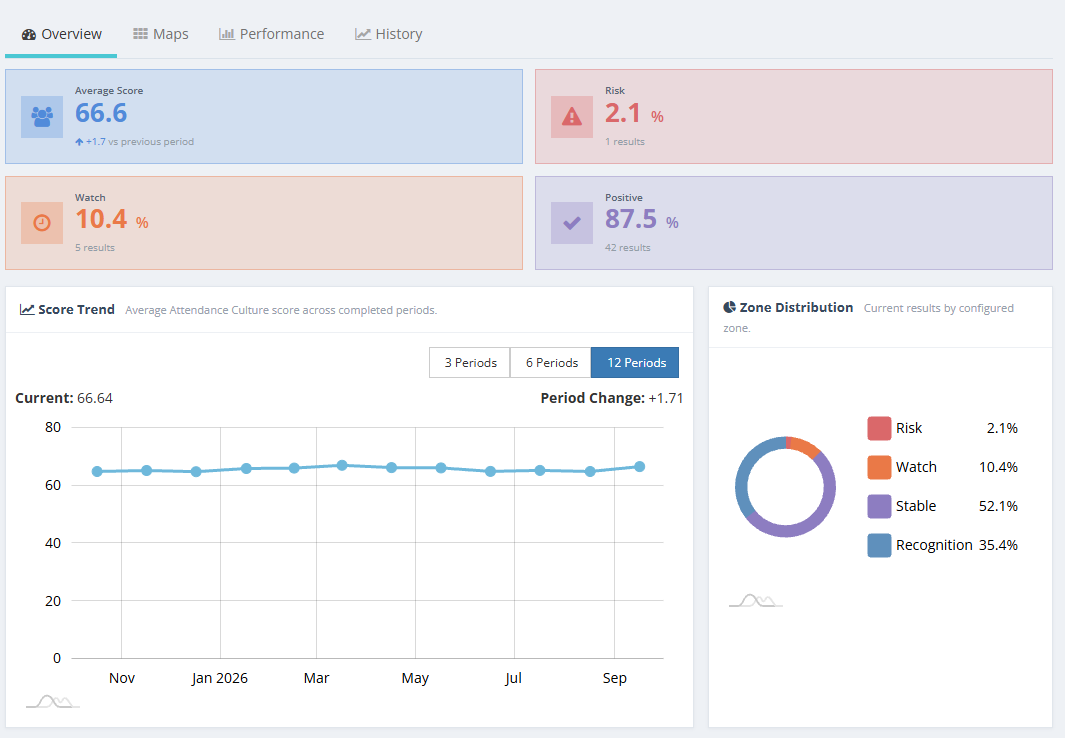
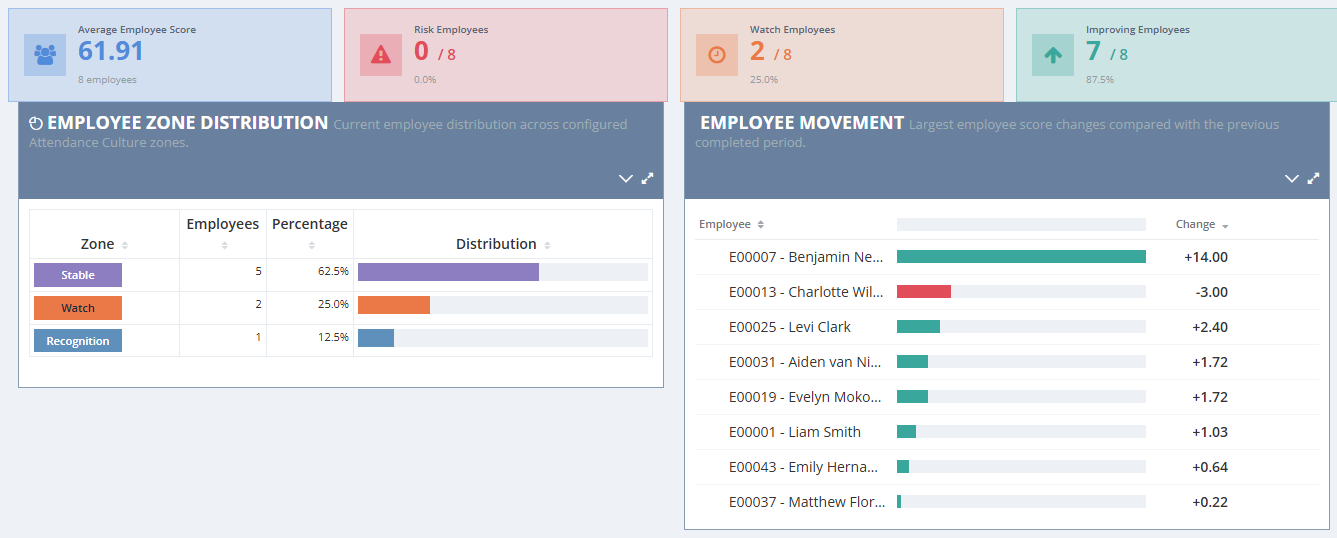
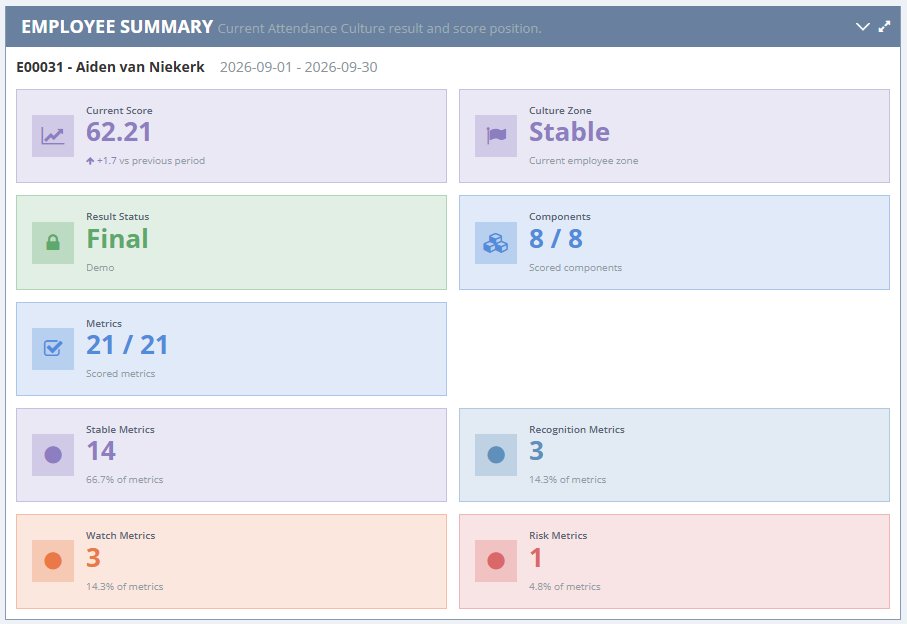
Bring the conversation into focus with company, department and employee views. Attendance Culture groups attendance patterns into eight components, drawing on 21 metrics. Employees can see their own result, so everyone works from the same picture.
See organisation-wide patterns, compare periods and identify where teams may need a closer conversation.
Understand team patterns alongside shift arrangements, workloads and changes in working conditions.
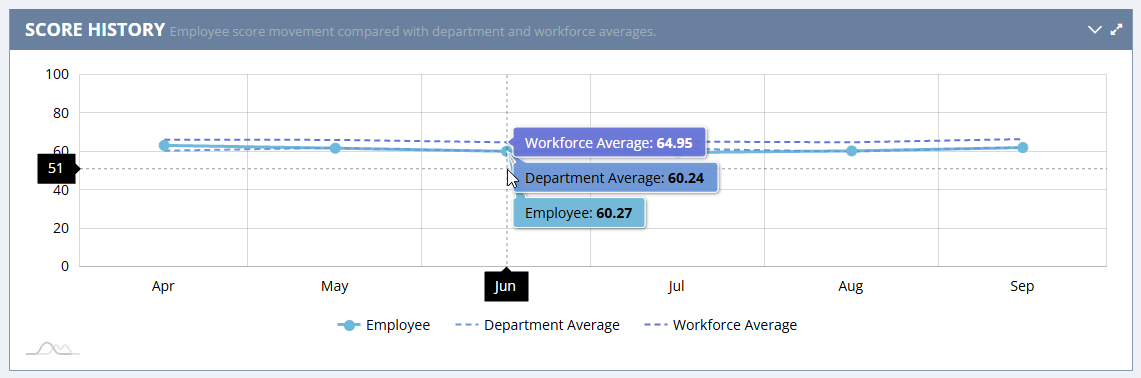
Explore one person’s components and trends to prepare a supportive, informed conversation. Employees see the same view in their own self-service.
Zones describe a configured result, not a person’s character or the cause of an absence. Use the colour, label, records and context together.
Patterns within the configured stable range. Keep checking context and supporting dependable habits.
A prompt to acknowledge contribution or improvement, while respecting legitimate time away.
A prompt to check an emerging pattern and offer an early, private conversation.
A prompt for closer review and timely support. Check the records and hear the person’s explanation.
Choose the perspective that matches your role, or explore a concern you want to understand.
Set the direction, build shared expectations and create an organisation where attendance is understood, supported and handled consistently by everyone.
Company GuideBuild dependable team habits, have supportive conversations and respond consistently when attendance becomes difficult for someone in your working team.
Manager GuideUnderstand expectations, see your own result, know how to communicate an absence and find practical ways to ask for support or raise concerns respectfully.
Employee GuideNotice changing patterns, ask thoughtful questions and understand possible causes before deciding what a change in someone’s attendance might mean.
Warning SignsAcknowledge dependable contribution, responsible communication and improvement while respecting health, personal circumstances and the legitimate time away that people need.
RecognitionSee how eight components, 21 metrics and four zones turn attendance records into a starting point for fair conversations.
How It WorksA useful starting point is questioning the assumptions that shape how we respond.
Reality: A consequence does not explain a cause. Understand what is happening, make expectations clear and agree on an appropriate response.
Reality: Fairness means using a consistent process while considering relevant circumstances. Similar concerns deserve the same care, even when the appropriate response differs.
Reality: Commitment also shows in honest communication, responsible choices and dependable contribution. Working while unwell should not be the standard people feel pressured to meet.

Explore changing attendance patterns, possible causes and the private conversations that help people understand concerns and agree on practical support.
Read More
Acknowledge consistency, communication and improvement without encouraging work while unwell or overlooking legitimate absences.
Read More
Reflect on ten everyday habits, review your score and choose a practical next step for your workplace.
Read More