
ATTENDANCE CULTURE · COMPANY

Build attendance culture in the workplace

Attendance culture in the workplace starts with the decisions leaders make every day. People notice whose time is respected, whether managers keep commitments and what happens when someone needs help. A written policy matters, but the everyday response gives that policy its meaning. For owners, executives and HR leads, the task is to make reliability possible and expectations understandable across the organisation.

Why attendance is a leadership issue

Attendance affects how work is organised, how colleagues share responsibilities and whether commitments can be met. It also reflects the conditions people work within. A business cannot ask employees to communicate early while leaving them unsure who will answer or how a concern will be received.

Give attendance culture a named owner at leadership level, with HR and operational managers involved. Agree who handles policy questions, practical support and concerns about inconsistent treatment. Keep employees involved in identifying what needs to change.

Begin with questions rather than an organisation-wide warning:

  • Do employees know the standard and how to report an absence?
  • Can supervisors explain the process without improvising?
  • Are shift arrangements, workloads or communication habits making reliability harder?
  • Does the same standard apply to senior people?
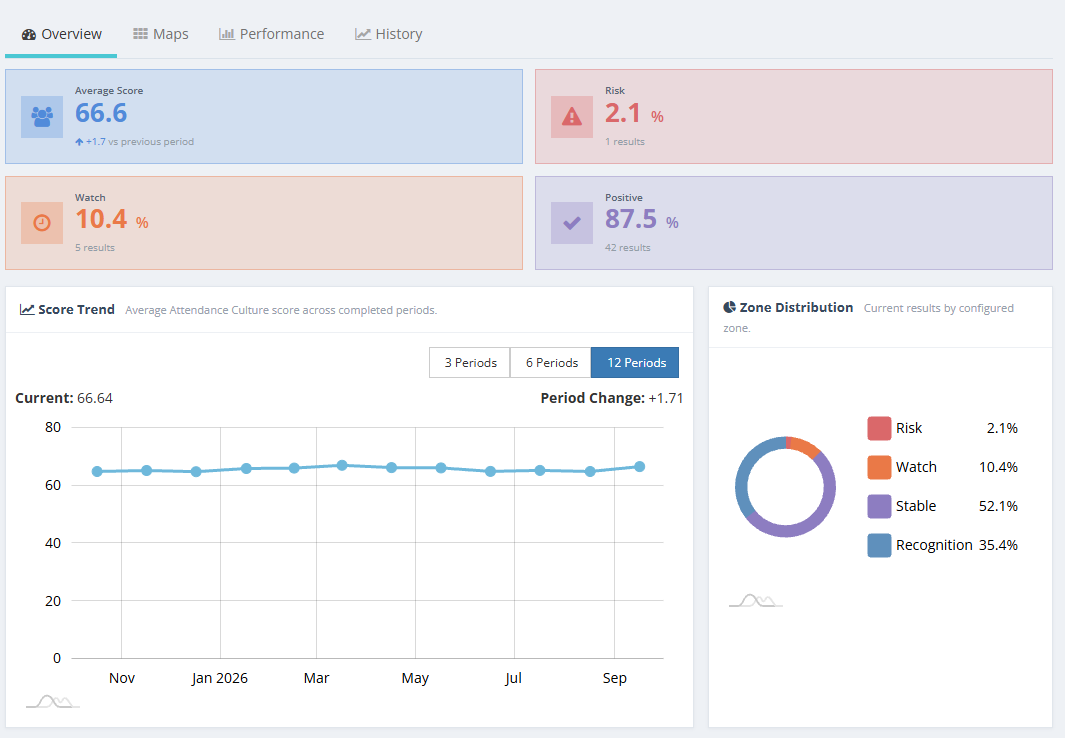
Demo company attendance dashboard
Demo data · Company view: the organisation-wide picture, so leadership can see where a closer conversation may help.

Understand the cost without blaming people

Unplanned gaps can mean disrupted handovers, delayed work, additional pressure on colleagues and time spent rearranging cover. An unhealthy response can add a different cost: employees stop raising concerns, managers make inconsistent decisions and trust becomes harder to rebuild.

Use your own evidence before attaching a financial figure. Separate planned leave, legitimate illness and unexplained absence. Do not count every hour away as avoidable loss or assume one employee caused every downstream delay.

If you need a business case, record the period, the work affected and the assumptions used. A useful internal worksheet includes the disruption, any additional cover, management time and the action taken. Avoid publishing a total until its basis can be explained.

Ask employees about the less visible effects too: unpredictable cover, missed breaks and uncertainty over whether asking for help will count against them.

Business team having support discussion

Set the tone from the top

Leaders should model punctuality, timely communication and realistic commitments. When plans change, explain the change rather than assuming seniority makes an explanation unnecessary. Acknowledge mistakes and show what putting them right looks like.

Make support a practical process. Managers need time for private conversations, a clear route to HR and guidance on what they may agree themselves. An instruction to “be supportive” is difficult to follow when nobody knows what help is available.

Listen across roles and shifts. A message delivered in an office meeting may never reach a night team or someone who is frequently off-site. Offer opportunities to ask questions without having to speak in front of the whole department.

Invite employee representatives into appropriate discussions. Shared responsibility does not mean every preference can be accommodated; it means people understand the decisions and have a meaningful opportunity to contribute.

Write an attendance policy people respect

An attendance policy should explain what people need to do in ordinary situations and where to turn when circumstances are difficult. Start with plain language, clear responsibilities and a process managers can apply consistently.

  • Explain working hours and how changes are communicated.
  • Name the reporting contact, timing and backup contact.
  • Distinguish planned leave, unexpected absence and late arrival.
  • Explain how relevant circumstances and supporting information are considered.
  • Provide a route for questions, review and concerns about treatment.
  • State who can access personal information and why.

Check the draft with employees and supervisors. Ask them to explain a few everyday scenarios in their own words. A signature alone does not show understanding.

Keep the policy aligned with applicable contracts, agreements and current South African legislation.

Measure culture without creating fear

Use measures to identify where a conversation or process improvement is needed. Look at reporting clarity, unresolved concerns, repeated changes in attendance and whether agreed support has been followed through. Include feedback about fairness alongside attendance records.

Review teams in context. Different shifts, staffing levels, job demands and transport arrangements can produce different patterns. A raw league table can hide those differences and encourage managers to defend numbers rather than solve problems.

Share themes rather than personal histories. Explain what information is used, who sees it and what decisions it informs. Give people a way to correct errors. Keep access proportionate and check current POPIA requirements when designing record handling.

Choose a small improvement, assign an owner and agree a review date. Report what changed, what remains difficult and what the organisation will do next. Improvement is more credible when employees can see follow-through.

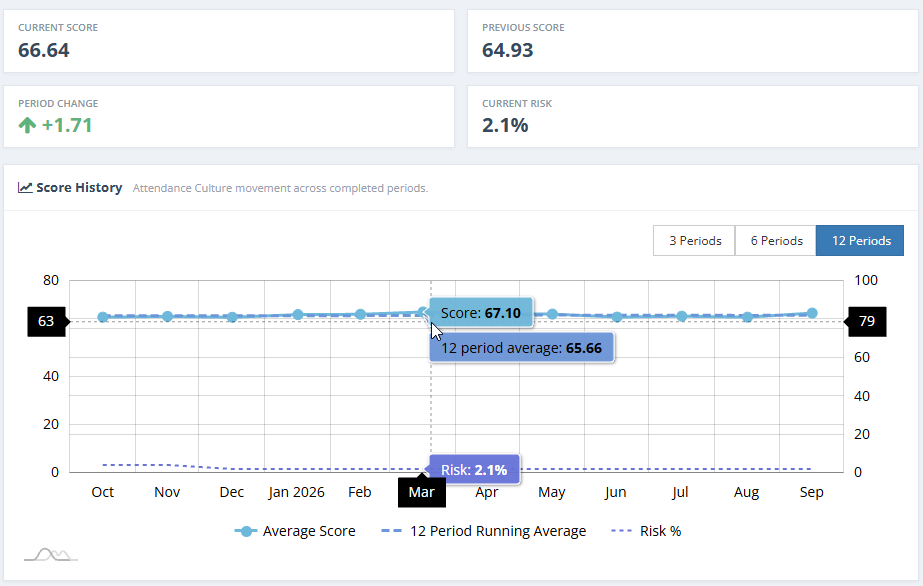
Example company attendance score history across twelve periods
Demo data · Company Score History across twelve periods, with the running average and Risk %. Check context and data quality before interpreting a score.

Frequently asked questions

Does support mean removing accountability?

No. Expectations, communication and follow-through still matter. Support helps people understand and address difficulties while a consistent process handles concerns fairly.

Should every department have identical attendance arrangements?

Core principles should be consistent. Practical arrangements can differ with the work, provided those differences are justified, explained and applied fairly.

Can we use absence figures to judge commitment?

Figures describe time away, not a person’s motivation. Check accuracy, leave categories and circumstances before drawing conclusions.

How often should we review the approach?

Agree a realistic review rhythm and revisit it after significant changes to work or staffing. Make time to review whether agreed actions actually happened.

Attendance Culture is a BioSyn module. Book a Demo.

Published by the BioSyn team · Last updated: 20 October 2026