ATTENDANCE CULTURE · MANAGERS

How to manage absenteeism with clarity and care

Knowing how to manage absenteeism starts with understanding what is happening, rather than deciding what it means. As a supervisor or team lead, you translate the organisation’s approach into everyday experience. Your consistency, questions and follow-through matter to both the person who is absent and the colleagues arranging the work. You do not need to solve every personal difficulty. You do need a fair process, accurate information and a clear route to help.

Agree on expectations with your team

Explain starting times, handovers, reporting an absence and communicating a delay. Do not assume that everyone has received the same information or understands a rule in the same way. Ask people to describe what they would do if transport failed before a shift.

Confirm the reporting contact and a backup. Explain when an update is needed and how a person can communicate if they cannot use the usual channel. Keep changes visible to people who miss a briefing or work a different shift.

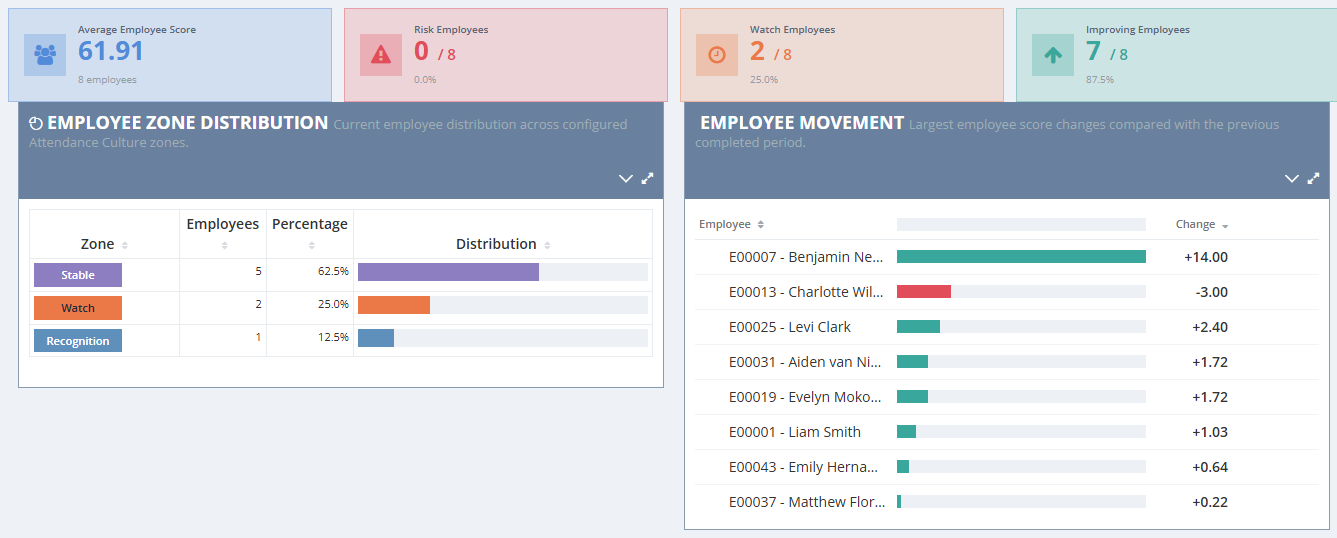
Your Department Summary gives you the team picture at a glance: the overall score, the zone, and how many people currently sit in Watch, Stable or Recognition. Use it to see where the shared expectations are working, not to single anyone out.

Finish with shared responsibilities: employees communicate as soon as reasonably possible; managers respond, arrange the work and follow up respectfully.

Demo department attendance dashboard showing illustrative scores and zone patterns
Demo data · Department Summary: the team's score, zone and how many people sit in each zone. Names and figures are fictional.

Be consistent, including with yourself

Consistency becomes most visible when someone is popular, experienced or difficult to replace. Use the same initial process for a favourite as for a new starter: check the facts, invite an explanation and consider relevant circumstances.

Attendance Culture helps here because every employee is assessed on the same eight components and 21 metrics, under the same configured rules. The data is consistent; your job is to make sure your response is too.

Hold yourself to the communication standards you expect. If you will be late or a meeting must move, say so. Correct your own errors and avoid making colleagues chase an answer you promised.

Fairness does not require identical outcomes in every case. Different circumstances can justify different responses. Be able to explain the process without disclosing another employee’s private information. If you realise you have handled similar concerns differently, discuss it with HR and agree how to improve.

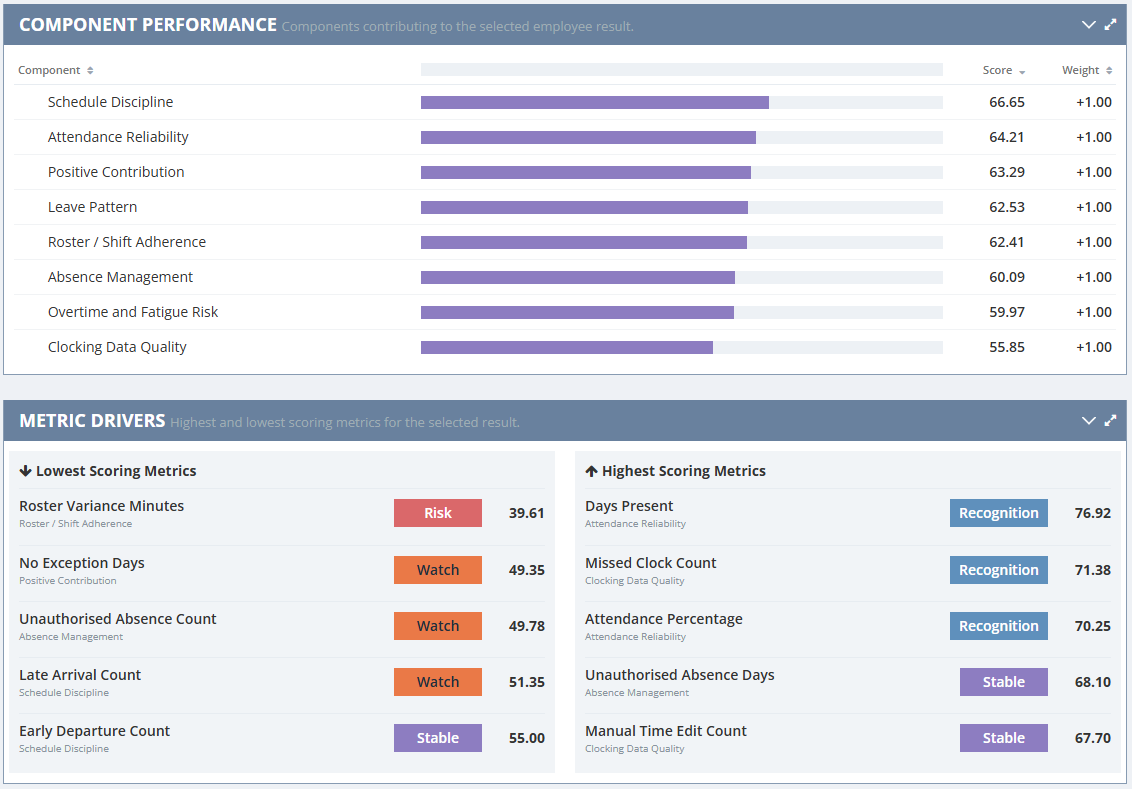
Demo Metric Drivers showing example metric zones
Demo data · Metric Drivers: the specific metrics behind one employee's result. Prepare from these, then ask what is happening.

Have an attendance conversation

  1. Prepare: Open the employee’s Metric Drivers and check the dates and the agreed expectation. Separate what the records show from assumptions.
  2. Speak privately: Explain the purpose and allow enough time for a response.
  3. Describe the concern: Use neutral, specific language and explain the effect on work.
  4. Listen: Ask what has changed and what may help. Do not press for unnecessary personal details.
  5. Agree next steps: Confirm responsibilities, support and any issue requiring HR advice.
  6. Follow up: Set a review date, share a factual summary and check progress.

Example opening: “I noticed your arrival time has changed over the past two weeks. I would like to understand what is happening and discuss what could help.”

Remember that the employee can see the same result in their own view. Starting from shared, specific information keeps the conversation fair. These are conversation starters, not disciplinary scripts; if a formal process may be needed, seek HR advice.

Document fairly, follow up and know when to escalate

Record the date, the specific concern, the employee’s explanation in neutral terms, the actions agreed and the review date. Distinguish a disputed point from an agreed fact, and offer a way to correct the summary. Avoid labels such as “lazy”, and keep sensitive details out of group chats.

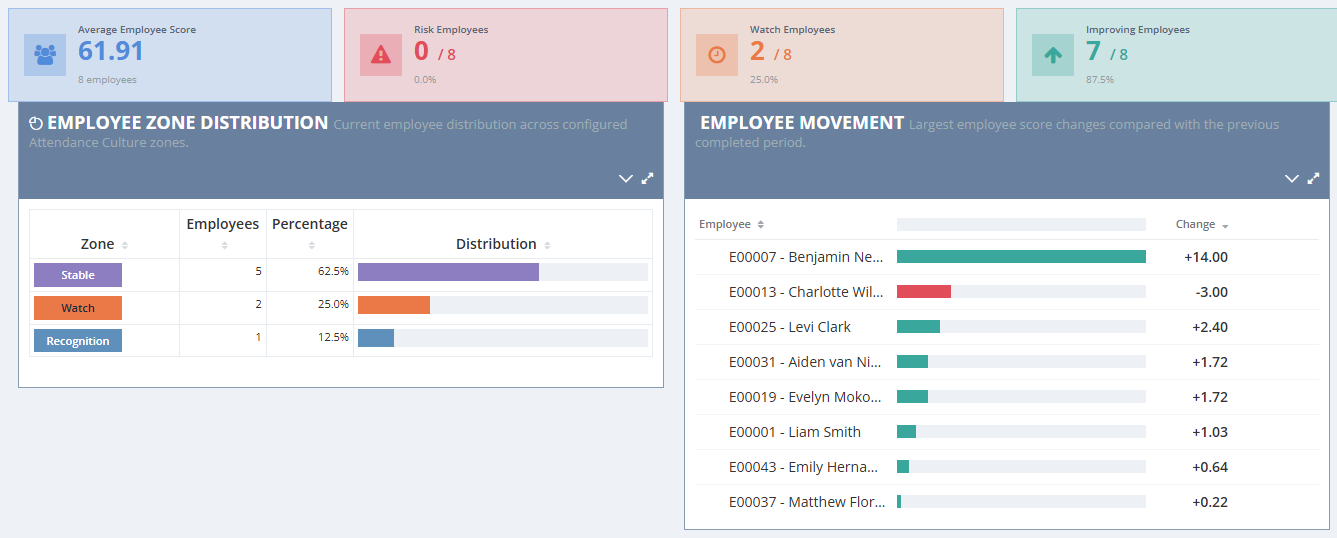
At the review date, check whether the agreed support is making a difference. Employee Movement shows who has improved or dipped since the last period, and the zone distribution shows how the team is spread. Recognise improvement as readily as you raise concerns.

Ask HR for guidance when an issue continues despite follow-up, an employee raises unfair treatment, a health-related adjustment may be needed or the situation exceeds your authority. Do not promise confidentiality you cannot maintain.

Demo department attendance dashboard
Demo data · Employee Zone Distribution and Employee Movement: a private manager view for checking whether follow-up is working.

Teams and departments: compare with context

Culture can differ between teams because managers communicate differently, workloads vary and local habits develop over time. A department with clearer reporting may reveal concerns that another team leaves unrecorded.

Shift work changes the picture

Consider start times, transport availability, handover arrangements, notice of roster changes and recovery between shifts. Invite input from night and weekend teams rather than designing the whole approach around office hours.

Make comparisons fair

Use the same period and rules, and consider team size and scheduled working time. Small teams can appear to change sharply when one person needs extended time away. Use differences to identify useful questions, not a public ranking of “good” and “bad” departments.

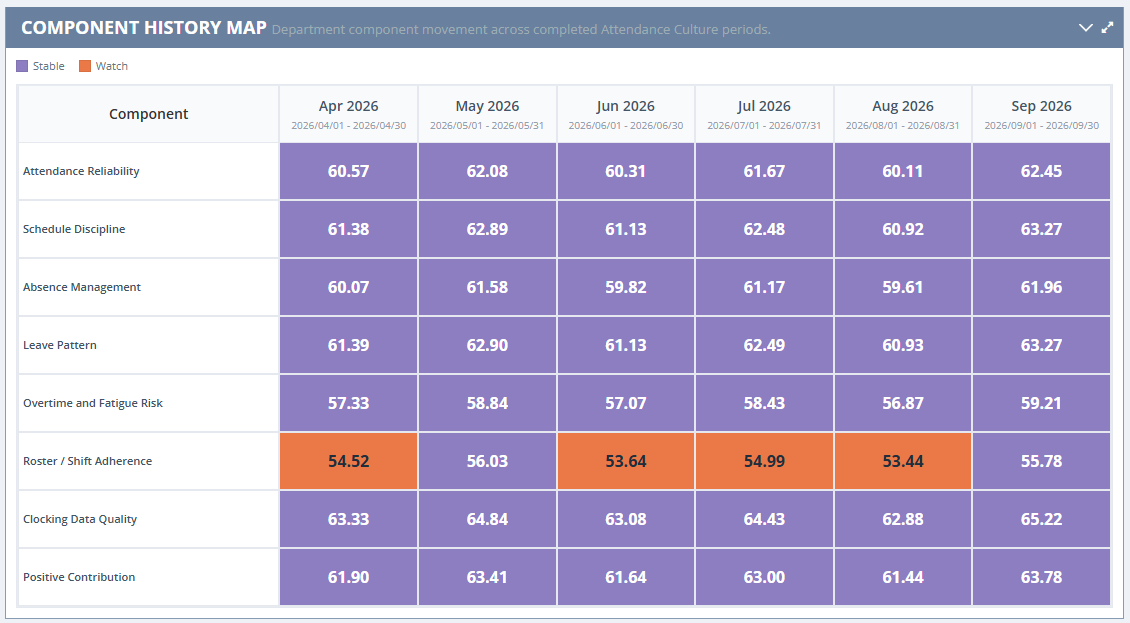
Example department component history showing changes across six periods
Demo data · Component History Map: how one department's eight components moved across six periods. Read the colour bands alongside shifts and working conditions.

Frequently asked questions

What if someone does not want to discuss personal details?

Focus on the work-related concern and what support or referral may help. Avoid demanding unnecessary information; ask HR about any information legitimately required.

Should I raise a Watch or Risk result immediately?

Check its accuracy and relevance first, then arrange a timely private conversation. A zone is a prompt to talk, not proof of misconduct.

How do I explain a different outcome to the team?

Explain the common process and expectations. You do not need to disclose another person’s health or family circumstances to show that a process exists.

What if the issue involves my own manager?

Use the organisation’s alternative HR, grievance or reporting route. Keep a factual account and seek appropriate advice if you are unsure how to proceed.

Attendance Culture is a BioSyn module. Book a Demo.

Published by the BioSyn team · Last updated: 20 October 2026