ATTENDANCE CULTURE · EMPLOYEES

Why attendance matters at work

Understanding why attendance matters at work should not mean feeling guilty whenever life becomes difficult. Your health, responsibilities and circumstances matter. So do clear communication and the commitments your team plans around. This guide for South African employees explains the everyday expectations you may encounter, how to read your own Attendance Culture result, how to ask for support and what to do when an attendance concern does not feel fairly handled. You deserve to understand the process, not simply be told to follow it.

Seeing your own Attendance Culture result

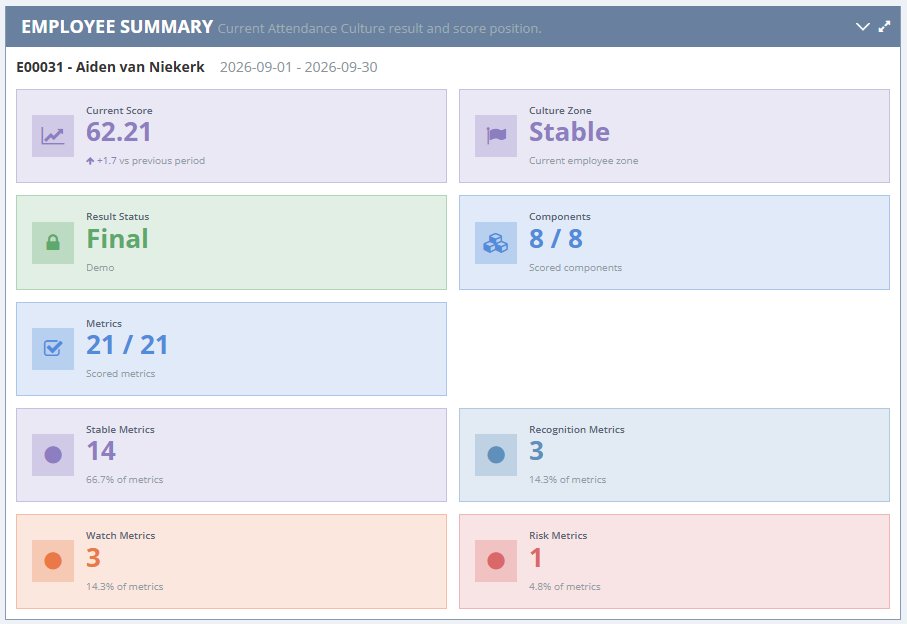
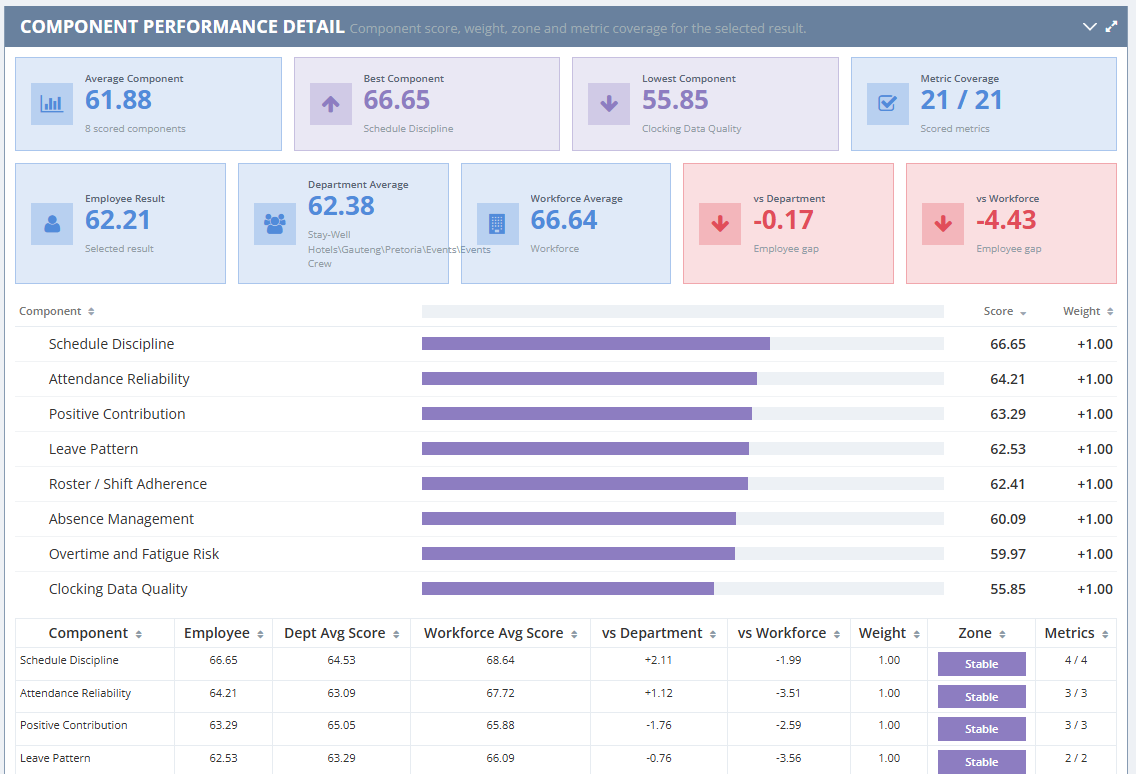
You can view your own Attendance Culture result through BioSyn Employee Self Service. You see the same picture your manager sees: your overall score, your zone, the eight components behind it and how things have moved over time.

Your result is a starting point for a conversation, not a verdict. A score cannot explain a late bus, a sick child or a changed roster. That is why the records come with a conversation, and why you can ask for an entry to be checked or corrected if it looks wrong.

Most metrics usually sit in the Stable zone. Recognition highlights what is going well. Watch and Risk are prompts to talk early, while there is still room to find a practical solution together.

Demo employee summary showing a fictional name, staff number and attendance indicators
Demo data · Employee Summary: your score, zone and how your 21 metrics are spread across the four zones. Names and figures are fictional.
Demo Component Performance Detail with eight component scores
Demo data · The eight areas attendance is looked at in, each with its own score, compared with your department and the wider workforce.

Know what is expected, and ask when it is unclear

Your workplace should explain your working hours, how changes are communicated and what being ready to work means for your role. You should also know who to contact if you cannot attend or expect to arrive late.

Ask for the policy or process in a form you can understand. If something is unclear, use a practical example: “If my transport is delayed before an early shift, who should I contact and what happens if they do not answer?”

Reliable attendance helps colleagues plan handovers, cover and shared tasks. That does not mean every absence is avoidable or that attending while unwell is always the responsible choice. Honest communication helps the team respond to what is actually happening.

Managers have responsibilities too. They should explain expectations, respond to concerns and use a consistent process. You can ask questions without having to agree that every decision is correct.

Report an absence as clearly as you can

Follow the workplace reporting procedure as soon as reasonably possible. Use the named contact and the agreed channel. If that person is unavailable, try the backup route rather than relying on a message passed through several colleagues.

  • Say that you cannot attend or expect a delay.
  • Give the date or shift affected.
  • Share a likely arrival or update time if you know it.
  • Ask what further information or documentation is needed.
  • Confirm any urgent handover information that you can reasonably provide.

Suggested wording: “I cannot attend my shift today because I am unwell. I have contacted the reporting number and will update you tomorrow morning. Please confirm any documentation I need to provide.”

Reported and unauthorised absences are recorded differently, so letting the right person know really does count. If an emergency prevents you from reporting normally, explain when you are able and keep a note of your attempts to make contact. You do not need to put detailed medical or family information into a team group.

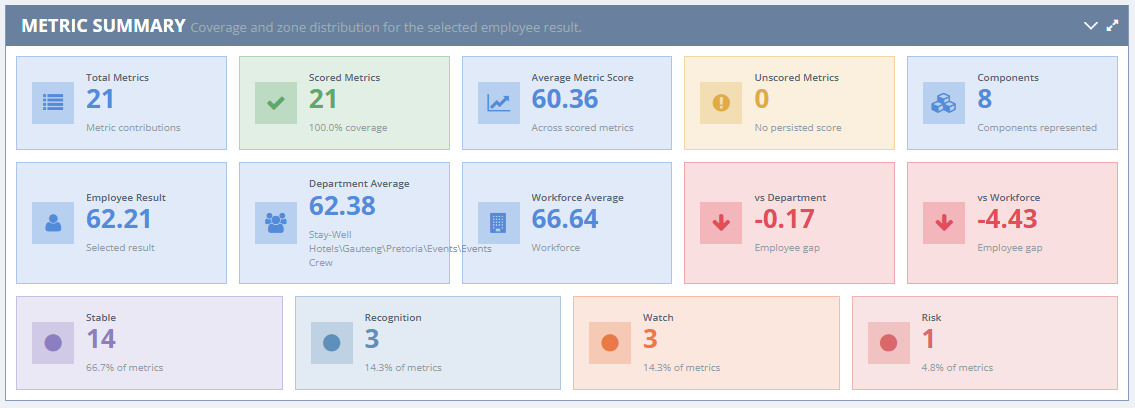
Demo Metric Summary with 21 metrics and four zone counts
Demo data · Metric Summary: all 21 metrics are scored, with reported and unauthorised absence measured separately.

Understand leave in general terms

The Basic Conditions of Employment Act (BCEA) provides for different kinds of leave. Eligibility, evidence and the way an entitlement applies depend on the circumstances and applicable rules. Ask HR to explain your position rather than relying on a colleague’s balance or an online summary alone.

In your Attendance Culture view, leave sits in its own Leave Pattern component. Approved leave is recorded, but taking leave you are entitled to is not a mark against you.

Annual leave

Annual leave provides planned time away from work. Follow the application and approval process and discuss dates in advance. Do not assume that sending a request confirms approval.

Sick leave

Sick leave concerns absence because of illness or injury. Paid entitlement and requirements for supporting evidence are subject to the applicable rules. Ask what is needed and how to provide it privately.

Family responsibility leave

This covers certain specified family circumstances for employees who qualify. It does not automatically cover every family commitment. Ask which provision or other arrangement may apply to your situation.

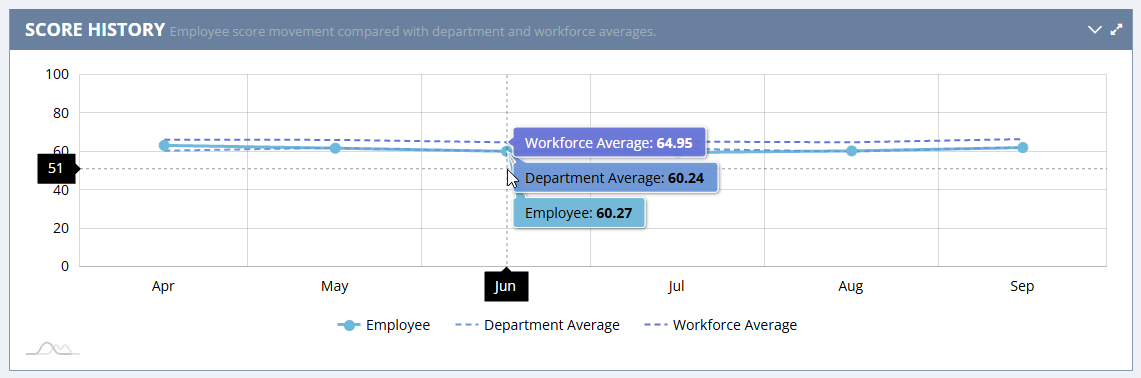
Demo employee Score History comparing employee, department and workforce
Demo data · Score History: your trend beside your department and workforce averages. Context, not a judgement.

Ask for support before a difficulty grows

If transport, caregiving, health, conflict or workload is affecting attendance, consider raising it early with the appropriate person. You can explain the practical effect without sharing every personal detail. Ask to speak privately if the subject is sensitive.

Try: “My usual transport no longer reaches the early shift reliably. I want to discuss the problem before it affects more shifts. Can we review what options are available?”

Your Score History can help you start that conversation: it shows whether a change is recent or long-standing, and how it compares with your team. Be clear about what you are asking for, how long the difficulty may last and what you can commit to.

Confirm agreed arrangements and review dates. If an arrangement is not helping, say so. Asking for support is not a guarantee that every request can be met, but it gives everyone a better basis for a practical discussion.

Raise concerns and correct your records

Records can be wrong. A missed clocking or a manual time edit affects your result, so if an entry looks incorrect, ask for it to be checked before anything is decided on it.

Start by checking the facts and asking for an explanation of the process. A different outcome for another person does not necessarily mean the circumstances were the same. Equally, an unclear or inconsistent response deserves a respectful question.

Keep a factual record: dates, what was said, the rule explained and the response you received. Avoid collecting or sharing other employees’ private information to make your point. If the concern remains unresolved, use the organisation’s HR, employee representative or grievance route, and ask for an alternative contact if your manager is involved.

Useful questions include: “Which policy applies here?”, “Can I correct the dates in this record?” and “How can I request a review of this decision?”

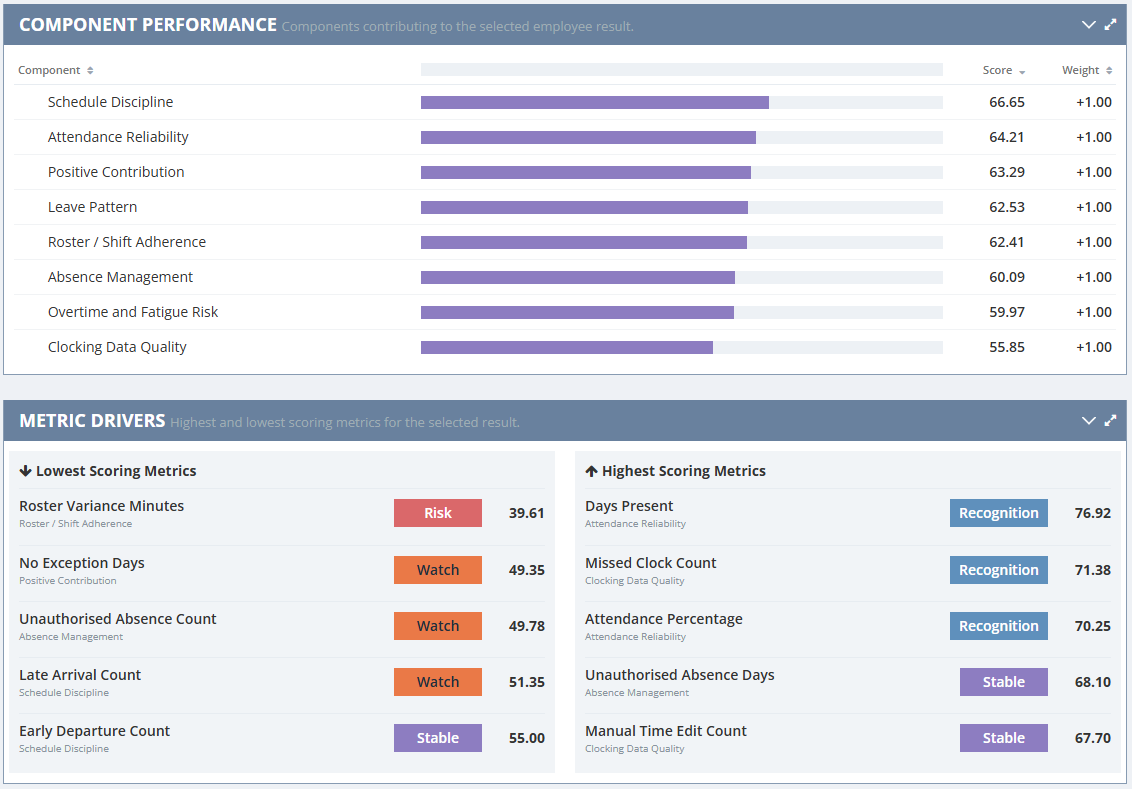
Demo Metric Drivers showing example metric zones
Demo data · Metric Drivers: your strongest and weakest metrics. Missed Clock Count and Manual Time Edit Count show record quality, so check them if something looks wrong.

Frequently asked questions

Can I see my own Attendance Culture score?

Yes. Through BioSyn Employee Self Service you can see your own score, zone, components and trend: the same picture your manager works from.

Must I share my diagnosis in a team message?

Avoid sharing sensitive medical details in a group. Ask HR which information is legitimately required, who should receive it and how to provide it privately.

What if I cannot predict when I will return?

Say that you do not yet know. Agree a reasonable time or method for the next update instead of promising a return date you cannot confirm.

Can I ask for an attendance record to be corrected?

Yes. Ask the appropriate person to explain the record and the correction process, and identify the specific date or entry you believe is wrong.

Does this guide replace my contract or legal advice?

No. Your entitlement depends on the applicable rules and circumstances. Ask HR to explain your position; see the information note below.

Official guidance: annual leave, sick leave and the BCEA.

Attendance Culture is a BioSyn module. Book a Demo.

Published by the BioSyn team · Last updated: 20 October 2026