
ATTENDANCE CULTURE · EARLY WARNING SIGNS

Notice attendance patterns early. Respond with support.

Attendance patterns can provide a reason to check in, but they do not explain themselves. A repeated absence, a gradual change in arrival times or a sudden difficulty for someone who is usually dependable deserves attention without an assumption about motive. Early support starts with noticing accurately, asking privately and understanding what the person needs to communicate or address. The aim is to respond while there is still room for a useful conversation.

Notice changes, not just totals

Look for a change from the person’s usual attendance or from an agreed working arrangement. One total can combine planned leave, illness, shift changes and unexplained gaps, even though those situations need different responses.

  • Recurring absences on particular days, including Mondays or Fridays.
  • Arrival times moving later over several weeks.
  • A sudden change in someone whose attendance was previously steady.
  • Difficulties around pay dates, changed shifts or new reporting arrangements.
  • Increasingly late communication about an absence.
  • Repeated difficulty returning after a change in duties or working hours.

These are prompts for questions, not evidence of dishonesty. A recurring appointment, transport timetable or caring responsibility could also follow a pattern. Check the records and the relevant dates before arranging a conversation.

Do not turn a single difficult week into a permanent description of a person. Keep the period and context visible.

Colleagues having a quiet check-in away from the busy work area
AI-generated workplace illustration.
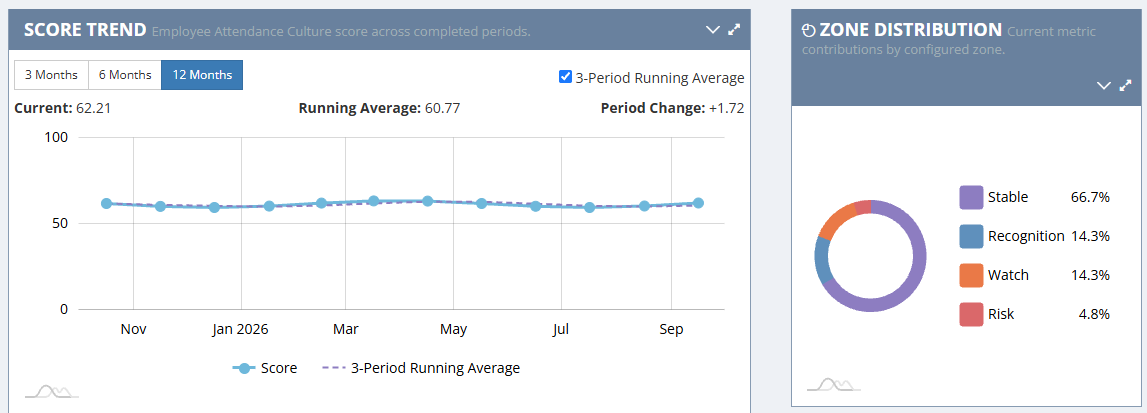
Example employee attendance trend and distribution without a name or staff number
Demo data · Score Trend and Zone Distribution for one employee. A changing pattern starts a private conversation; it does not explain the cause.

Explore possible causes with an open mind

Transport availability, family care, health, exhaustion, workplace conflict and workload may affect attendance. More than one issue may be involved, and the first explanation may not describe the whole situation.

Ask practical questions: “Has anything changed about your journey?”, “Are the new starting times workable?” or “Is there something in the way work is organised that we should understand?” Give the person time to answer without suggesting the answer you expect.

Do not diagnose burnout, illness or a family problem from a pattern. Someone may prefer to discuss a sensitive issue with HR or another appropriate person. Explain that route and focus on the information needed to plan work and consider support.

Include the workplace in the questions. Frequent last-minute changes, unresolved disagreements or inconsistent manager responses may need attention alongside an individual’s circumstances. Support should not mean asking the employee to solve an organisational problem alone.

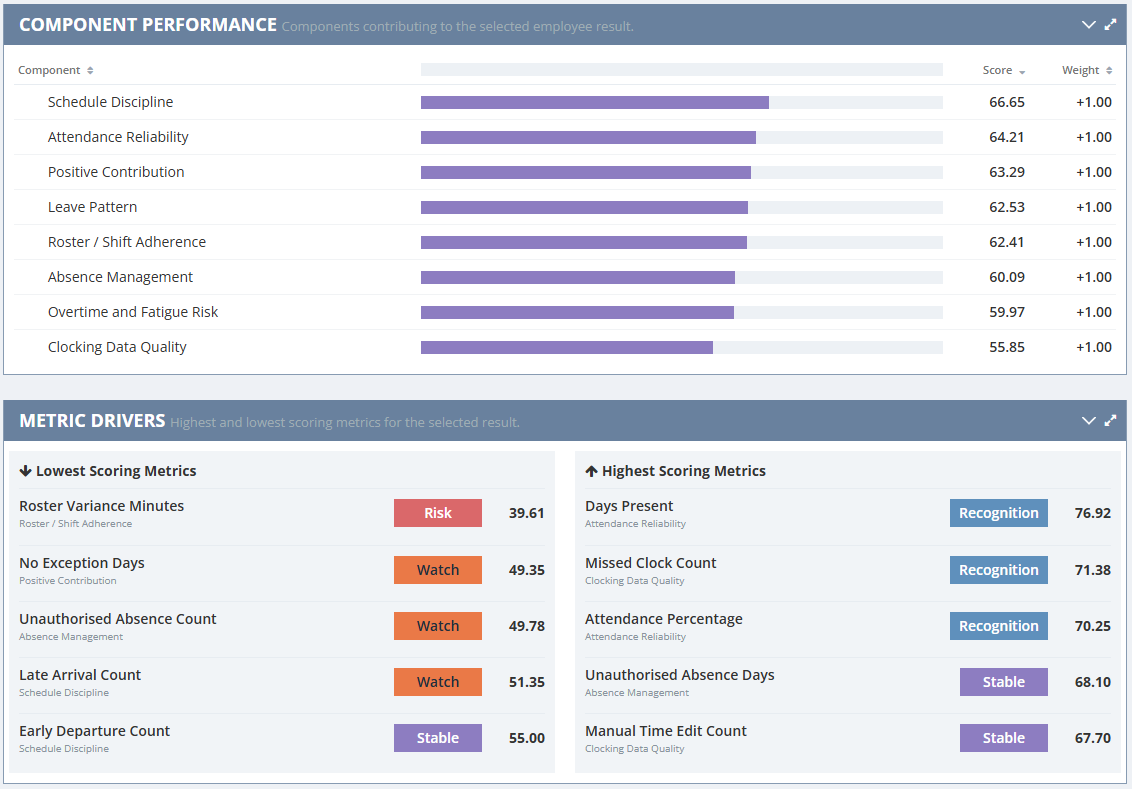
Demo Metric Drivers showing example metric zones
Demo data · Metric Drivers: Watch and Risk point to the specific metric worth asking about, such as roster variance or late arrivals. A prompt, not a verdict.

Notice early, help early

In Attendance Culture, the Watch and Risk zones are designed for exactly this moment: they flag a changing metric early, while the concern is still specific and manageable. Begin with a private check-in, explain what you noticed and ask whether the record is accurate. Correct mistakes before discussing their meaning.

Listen to the explanation and explore what is within each person’s control. Agree a practical step, who is responsible and when you will review it. That might mean clarifying the reporting route, asking HR about an adjustment or giving earlier notice of an agreed change.

Be clear about what you can and cannot promise. If a request needs approval, say who will consider it and when you will provide an update.

At the review, ask what helped, what did not and what happens next. Recognise progress without expecting a personal difficulty to disappear immediately. Where concerns continue, get appropriate HR advice rather than improvising a formal response.

Avoid responses that close the conversation

A public call-out may make someone less willing to explain a problem. A joke about “another long weekend” can communicate a conclusion before any conversation has happened. Keep the discussion specific, respectful and private.

  • Do not assume a weekday pattern proves misconduct.
  • Do not compare personal health or family circumstances in front of colleagues.
  • Do not ask others to investigate someone’s private life.
  • Do not promise support and then fail to follow up.
  • Do not ignore the pressure repeated cover may place on the rest of the team.

Colleagues arranging cover need operational information, not a person’s private explanation. Say what work needs to change, who is handling the arrangements and where to raise workload concerns.

Supporting one person and listening to the wider team are compatible responsibilities. Keep both in view without inviting colleagues to judge the absence.

Protect privacy and use patterns carefully

Attendance discussions can involve sensitive personal information, especially where health or family matters arise. POPIA sets conditions for lawful processing and protection of personal information. Collect only information appropriate to the purpose, limit access and use the organisation’s authorised process.

Keep a factual summary of work-related concerns, agreed actions and review dates. Avoid unnecessary personal detail, speculative labels or forwarding private explanations into informal chats. Give people an appropriate way to question or correct inaccurate records.

When discussing departmental themes, use aggregated information where practical. Be alert to small groups where a summary can still identify an individual. Explain the purpose of a review and avoid publishing rankings that reveal personal circumstances.

Frequently asked questions

Are Monday or Friday absences automatically suspicious?

No. A recurring day can have many explanations. Check the facts and ask privately rather than treating the day itself as proof of a problem.

Should a reliable person be left alone when attendance changes?

A respectful check-in can still help. Make it clear that you noticed a change and want to understand, rather than assuming their commitment has changed.

What if the records are wrong?

Correct the record through the appropriate process before relying on it. A conversation based on inaccurate information can undermine trust unnecessarily.

When should a concern go to HR?

Seek HR input where the issue exceeds your authority, involves sensitive support needs, remains unresolved or may require a formal process.

Privacy reference: Information Regulator South Africa.

Attendance Culture is a BioSyn module. Book a Demo.

Published by the BioSyn team · Last updated: 20 October 2026