
ATTENDANCE CULTURE · RECOGNITION

Rewarding good attendance without overlooking real life

Rewarding good attendance should support a healthy workplace, not pressure people to ignore illness or hide difficulties. Recognition works best as a thoughtful acknowledgement of dependable contribution, responsible communication and progress. It should be understandable, fair and possible to discuss. The question is not simply who was present every day. It is which habits helped people work reliably together, and how to acknowledge those habits without making someone else’s legitimate time away count against them.

Be clear about what recognition is for

Recognition is a way to say that a contribution was noticed. It can reinforce the practical habits a team values: keeping commitments, communicating a change early and helping an agreed handover happen smoothly.

Explain the behaviour being acknowledged. “Thank you for letting us know early and preparing a clear handover” is more useful than “You are one of the good ones”. Avoid comparing a person favourably with a colleague who was absent.

Ask employees what feels meaningful and appropriate. Some appreciate a quiet thank-you; others are comfortable with acknowledgement in a team meeting. Public attention should not be the default where someone would prefer privacy.

Recognition does not replace fair working arrangements, adequate staffing or a manager’s responsibility to address concerns. It should sit alongside those basics, rather than being offered as compensation for a process that remains confusing or unfair.

A small workplace team acknowledging a colleague’s contribution
AI-generated workplace illustration.

Why perfect-attendance awards can backfire

A reward based only on having no recorded absence can send an unintended message: the safest way to qualify is to attend even when unwell. Being present while not well enough to work is often called presenteeism. It should not become the behaviour people feel expected to demonstrate.

Legitimate illness, disability-related needs and family circumstances can affect who qualifies for an award. An employee can communicate responsibly and contribute dependably while still needing time away. An unqualified “zero absence” rule may overlook that reality.

Team rewards need the same care. If one person’s legitimate absence removes a reward for everyone, colleagues may put pressure on that person or discourage reporting. Recognition should not turn employees into enforcers of each other’s attendance.

Review an existing scheme before changing it. Ask how the rules are understood, what behaviour they encourage and whether qualified HR or legal advice is needed.

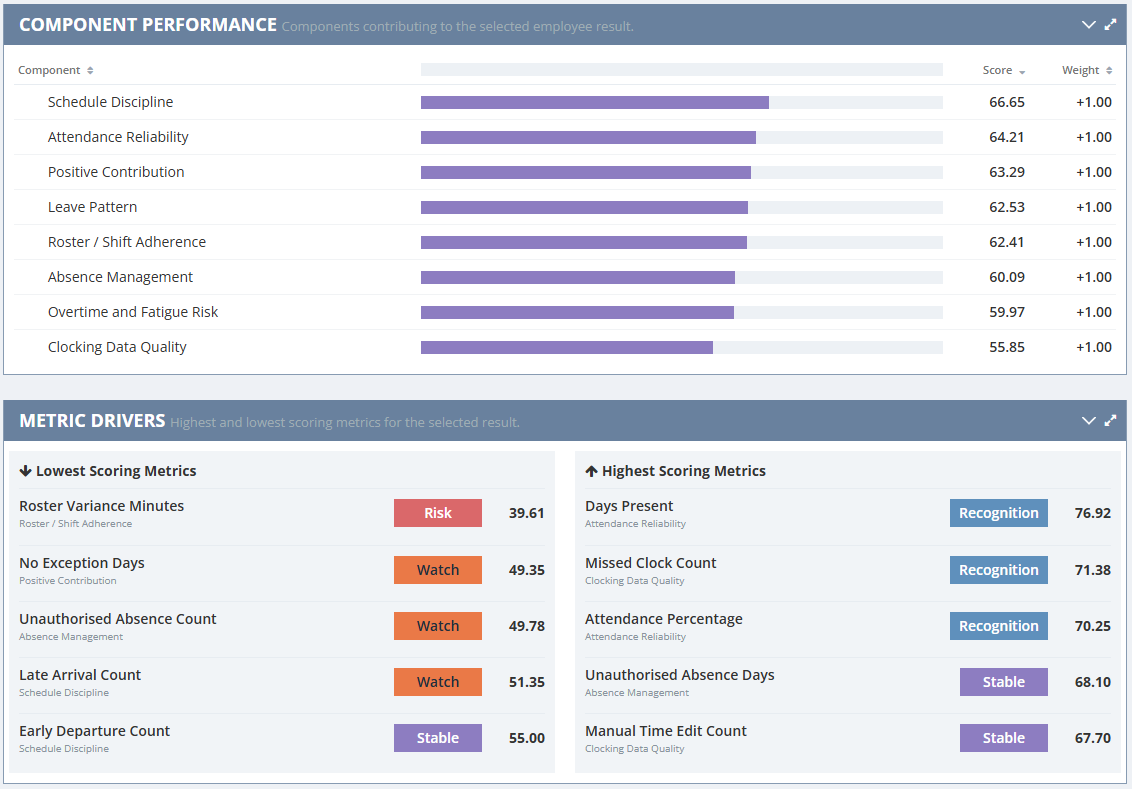
Demo Metric Drivers showing example metric zones
Demo data · Metric Drivers: the Highest Scoring Metrics in the Recognition zone, such as Days Present and Missed Clock Count, give you something specific to thank someone for.

Recognise the habits that support reliability

  • Consistency: Keeping agreed commitments and communicating when circumstances change.
  • Responsible reporting: Using the agreed route and giving useful updates.
  • Improvement: Following through on a realistic plan and discussing what helped.
  • Thoughtful handovers: Helping colleagues understand the next task or outstanding issue.
  • Agreed support: Covering a colleague where the arrangement is appropriate and manageable.

In Attendance Culture, the Recognition zone and the Positive Contribution component make these habits visible, for individuals and whole teams. Use them as a reason to say thank you, not as a league table.

Do not celebrate endless availability. Someone who always accepts additional work may be under pressure or unsure they can decline. Recognise help without creating an expectation of unpaid effort, missed rest or unlimited cover.

Keep individual support plans private, and check that recognition remains accessible across shifts and roles.

Use low-cost ideas that feel personal

A clear, specific thank-you can be enough. Choose an approach that suits the person and workplace rather than assuming that recognition needs a ceremony or a purchase.

  • Write a short note describing the contribution you appreciated.
  • Use a team catch-up to acknowledge a shared improvement.
  • Invite people to suggest a process change that would make work easier.
  • Share an example of a helpful handover, with permission and without personal details.
  • Thank night, weekend and off-site teams through a channel they actually receive.
  • Offer a private acknowledgement when public praise would be uncomfortable.

Be careful with food, gifts or social events. Participation should not exclude people because of shifts, dietary needs, beliefs, transport or caring responsibilities. Ask what is workable before arranging something.

Whatever the format, explain the same principles to everyone. Keep recognition proportionate and avoid language that creates insiders and outsiders.

Recognise teams and review the effect

Teams can be recognised for clearer communication, dependable handovers or a process that made reporting easier. Describe the shared habit and how different roles contributed. Avoid assuming everyone had the same opportunity to take part.

Consider who is carrying additional cover. Thanking the team should not hide sustained pressure on a few colleagues. Ask whether the workload is reasonable and whether a staffing or scheduling problem needs a leadership response.

Review recognition with employees. Does it feel understandable? Is it encouraging honest communication? Are people taking legitimate leave without feeling they have let everyone down? Listen to concerns from people who have never received acknowledgement.

Change the approach if it starts to encourage concealment, competition or working while unwell.

Frequently asked questions

Should we stop saying thank you for reliability?

No. Acknowledge reliability in context. Be specific about contribution and communication rather than treating the absence of illness as a measure of character.

Can improvement be recognised privately?

Yes. A private conversation can acknowledge progress without exposing the personal circumstances or support arrangements behind it.

What if colleagues think recognition is favouritism?

Explain the criteria, invite specific concerns and check how opportunities are distributed. Do not dismiss the concern because the intention was positive.

Can a team be thanked for covering an absence?

Yes, where cover was agreed and appropriate. Also check the workload and avoid implying that colleagues should always absorb gaps without support.

Attendance Culture is a BioSyn module. Book a Demo.

Published by the BioSyn team · Last updated: 20 October 2026