
ATTENDANCE CULTURE · ABOUT ATTENDANCE CULTURE

About Attendance Culture

This page is about attendance culture and why it deserves a more thoughtful conversation. Showing up is part of working together, but the way an organisation responds when attendance becomes difficult also shapes trust. Attendance Culture is a BioSyn module offering practical educational guidance. Its purpose is to give South African leaders, managers and employees a shared starting point for clearer expectations, earlier support and responsible recognition.

Why this initiative exists

Attendance can become a narrow conversation about who was present and who was not. That leaves important questions unanswered: Were expectations understood? Was the reporting route clear? Could someone raise a difficulty? Did a manager follow through on a promise?

This initiative creates space for those questions. It brings practical explanations and reflection tools together so people in different roles can discuss attendance without beginning from suspicion or blame.

The content is written for South African workplaces, including businesses with shifts, multiple departments and teams working in different settings. It does not assume that everyone has the same transport, responsibilities or access to a manager.

The aim is not to remove expectations. It is to make them understandable and to encourage a response that considers both the work and the person. Accountability is easier to discuss when the process itself is clear.

What we mean by attendance culture

Attendance culture is the shared attitudes, expectations and habits around showing up, and how people respond when someone cannot. It is expressed in policy, but also in ordinary decisions: how a delay is reported, how an absence is discussed and whether a concern receives an answer.

A healthy culture makes room for reliability and real life. Employees understand their responsibilities and communicate as soon as reasonably possible. Managers explain expectations, listen to circumstances and use a consistent process.

No workplace will avoid every disruption. The useful question is how people respond when disruption happens. A clear backup contact, an accurate record and a private conversation can be practical starting points.

Culture is not a label an organisation earns once. It is something people experience repeatedly. If what happens in practice differs from the policy, that gap is worth understanding and addressing.

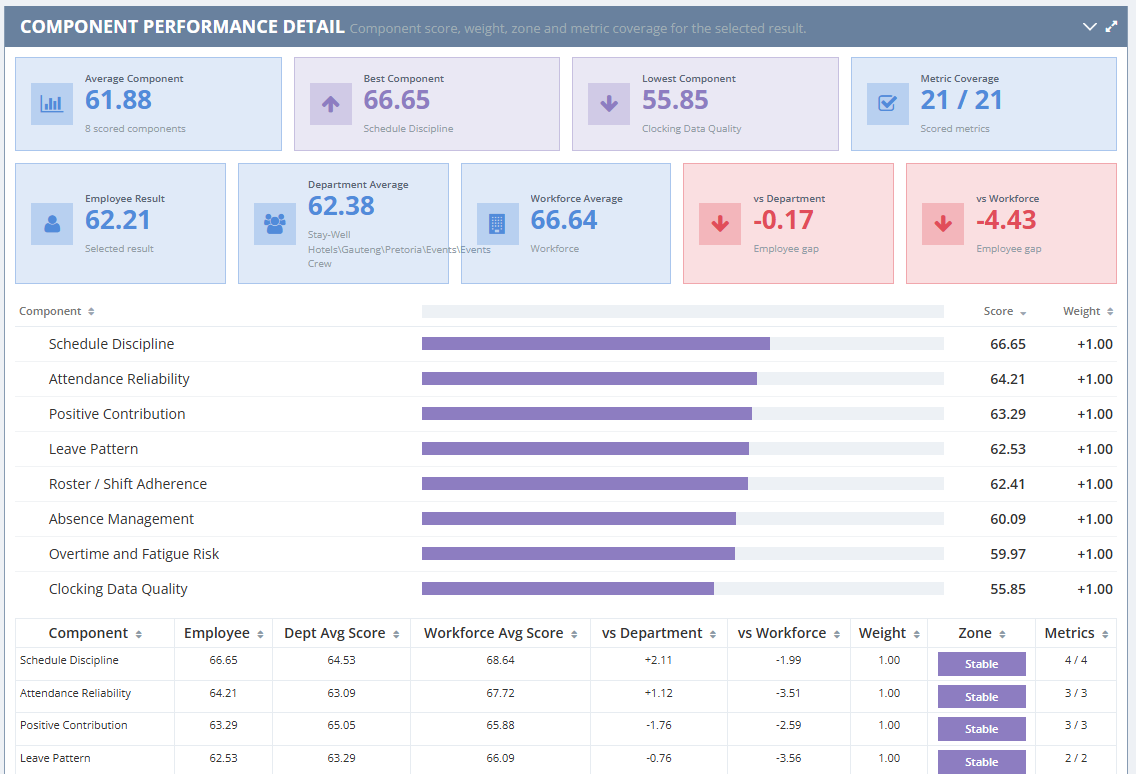
Demo Component Performance Detail with eight component scores
Demo data · The Attendance Culture module turns these principles into eight measurable components, compared fairly across employees, departments and the workforce.

Six principles guide the approach

  • Clear expectations: People know what is expected and how to ask questions.
  • Consistency and fairness: A common process considers relevant circumstances.
  • Trust, not policing: Concerns are explored without treating people as suspects.
  • Leading by example: Leaders follow the standards they ask others to meet.
  • Early support: Difficulties receive attention before frustration becomes the only response.
  • Recognising reliability: Dependable contribution is acknowledged without penalising legitimate leave.

These principles belong together. Recognition cannot compensate for an unfair process, and support cannot work if expectations remain unclear. Start with the gap that most affects your workplace, while keeping the whole approach in view.

The Attendance Culture module builds on BioSyn’s experience in time and attendance software and access control for South African businesses. See how it works.

Who the guidance is for

Owners and executives can use the company guide to review leadership decisions, policy and measures. HR leads can use it to support consistent implementation and make responsibilities clearer across the organisation.

Supervisors and team leads can use the manager guide to prepare conversations, keep factual records and understand when another person should be involved. The department guidance helps them compare situations with context rather than rank teams without explanation.

Employees can use the employee guide to understand reporting expectations, read their own result, ask for support and raise concerns about treatment. It is written to employees, recognising that their perspective is part of the culture too.

Anyone can use the early warning signs and recognition pages to question an assumption or improve a daily habit. You do not need to wait for a formal initiative to make a reporting contact clearer or thank someone thoughtfully.

How to use the site responsibly

Begin with the page that matches your role, then read another perspective. A manager may find that the employee guide highlights a question their team has not felt comfortable asking. An employee may find the company guide useful for understanding who can change a process.

Use the self-assessment as a conversation aid. Its score is an editorial reflection guide, not a validated research instrument, a judgement of an individual or a compliance certificate. Different answers are a reason to discuss experience, not force agreement.

Suggested opening lines and examples are illustrative. They are not reports of named clients or evidence that one approach guarantees a result. Local circumstances and applicable processes still matter.

Personal information should be handled through appropriate authorised processes.

Choose one useful action, agree who will take it forward and return to see whether it helped. That practical follow-through is the purpose of the guidance.

Frequently asked questions

Is this a set of legal instructions?

No. It offers general educational guidance; see the information note below.

Is the self-assessment a scientific measure?

No. It is a practical reflection checklist with editorial score bands. It is not validated and should not be used to judge employees or certify compliance.

Who is responsible for attendance culture?

Responsibility is shared. Leaders shape conditions and processes; managers put them into practice; employees communicate and meet agreed responsibilities where reasonably possible.

Where should we begin?

Choose your role guide or take the self-assessment. Identify one clear gap, discuss it with the people affected and agree a manageable next step.

Published by the BioSyn team · Last updated: 20 October 2026